Live · NBC 60
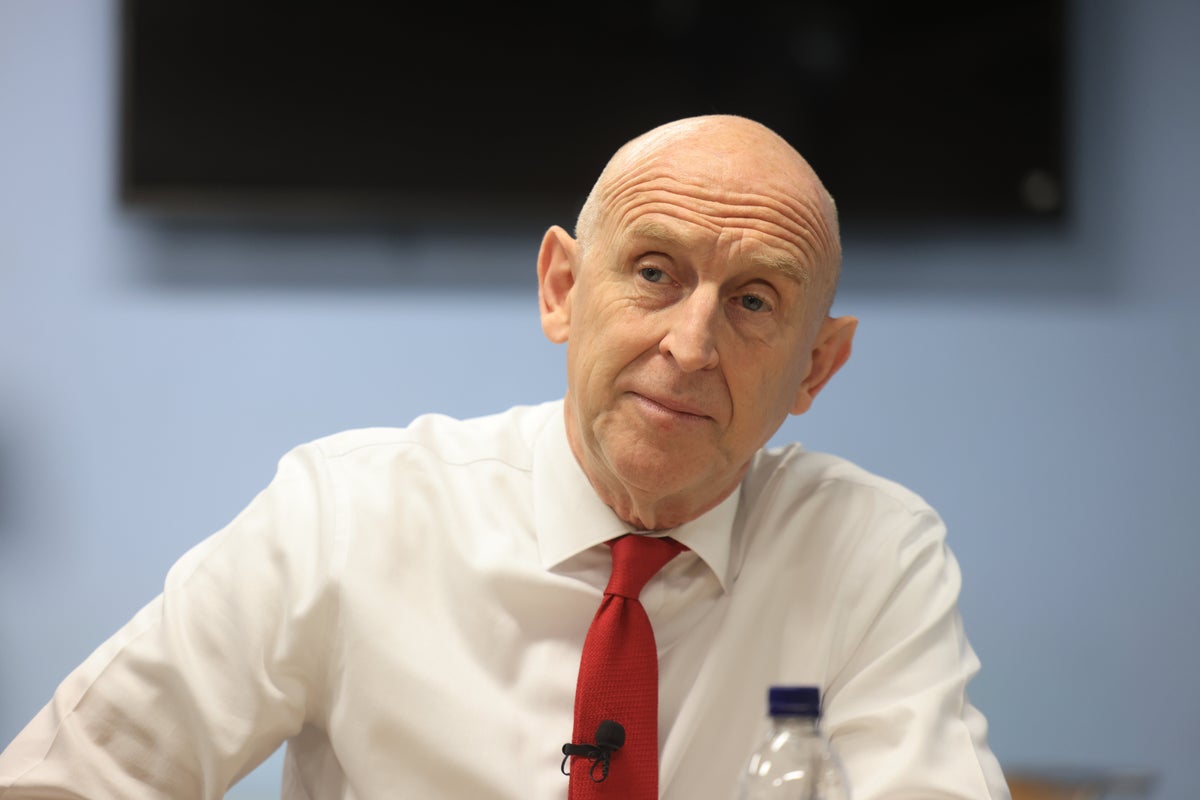
P ossibly the most remarkable thing about John Healey ’s upcoming Budget is that he has already persuaded everyone it will be a “boring” one – when in fact it may be anything but. In truth, a masterclass in playing down expectations will be covering up a major bank heist, in the form of higher taxes on the sector, to fund the various mini gifts Andy Burnham wants to scatter around for voters in what looks like a preparation for an early election, even if he denies it. Someone has to pay for taking VAT off energy bills and keeping bus tickets capped at £2 and all the other mini measures being prepared and the banks and their huge profits are far too tempting for a Labour chancellor.
But like any “ bank job ” this one will not come risk free – and in the case of the UK economy, the risk could be immense. Chancellor John Healey will unveil his Budget on Wednesday (Ian Vogler/Daily Mirror/PA) (PA) The argument in favour of going after the banks is that they have generated profits of around £200bn in the past five years. Labour MPs are looking at the bank surcharge introduced after the financial crisis of 2008, which currently stands at 3 per cent but was originally 8 per cent before it was cut by the Tories.
Mr Healey is expected to raise it to around 8 per cent again, at the request of his former employers, the trade unions. It is worth remembering that the bank surcharge comes on top of 25 per cent corporation taxes on profits, so to go for 8 per cent is to take a third of all bank profits. The banks are – in a not too shocking development – unhappy about the idea of losing so much money to a profligate government which cannot even bring its own welfare budget under control.
But as the current welfare secretary Pat McFadden noted as he tried to persuade Labour MPs to accept Sir Keir Starmer’s attempt to reduce the increase by about £5bn a year: “Every meeting I have is 'who can we tax in order to pay benefits to others'. They're asking the wrong questions." Mr Burnham is now Labour leader and prime minister precisely because he takes that view. As he told Tory leader Kemi Badenoch recently in exchanges over meeting the 3 per cent of GDP on defence target: “National security cannot come at the expense of social security.” The risk in a post-Brexit world though is that the banks may say enough is enough.
To put this into perspective, the banking sector was worth £223.6bn (about 8 per cent) to UK economic output in 2025. Andy Burnham wants lots of mini giveaways to voters (AFP/Getty) The Independent has been told that a number of major international banks and financial institutions are now looking seriously again at relocating overseas because “of the tax situation in the UK”. Senior executives are said to be actively looking to move financial institutions in the next two to three years unless things change.
Cities such as Hamburg, Paris, Frankfurt and Amsterdam are offering more attractive tax environments without the added disadvantages of Brexit. Already, many businesses headquarters have relocated to Dublin, Luxembourg, Milan and Lisbon because of the uncertainty in the UK. But a major coordinated move by international banks could be devastating to the UK economy.
All this may be talk or even exaggerated sabre rattling but it underlines that simply swooping in and nabbing bank profits like a modern day Robin Hood is not a free hit. And if a Labour government was to scare off the most important sector to the British economy then there would be very serious problems. Not least an inability to finance the sort of massive public spending that Mr Burnham is eyeing to tackle issues such as social care.
A briefing to journalists by the Dutch bank ING last week carried a hint of the concerns that the sector as a whole has: “We are not in favour of sector specific taxes, we are in favour of liquidity and security, and increasing taxes clearly has an impact on investors and the industry. The UK banking sector has been an incredibly important driver of the health of the UK economy, businesses, UK retail, and for attracting private capital investment.” It comes with a continued belief that the UK economy under Labour’s stewardship is not business friendly. The efforts by Mr Healey’s predecessor Rachel Reeves to woo and reassure business feel like a distant memory.
The “jobs tax” national insurance hike will remain in place. Mr Healey is looking at yet another big increase in the minimum wage of around 4 per cent and the workers’ rights package for trade unions is already making it hard to employ people and operate nimbly. So while Mr Healey may hope to bore us with a “dull Budget”, perhaps laying the groundwork for an early election, his statement could have a much bigger effect than is being anticipated.
And not for the good of the country.
Source: The Independent